Picture yourself waking up to Atlantic sunrises, coffee in hand, and toes in the sand within minutes. If you are drawn to that oceanfront lifestyle on Singer Island, you also want a clear plan for HOA rules, reserves, insurance, and rental options. In this guide, you’ll learn what to expect by building type, how Florida’s condo laws affect your budget, and exactly what to review before you buy. Let’s dive in.
Why Singer Island stands out
Singer Island is a narrow oceanfront peninsula just north of West Palm Beach. Most of the island lies within the City of Riviera Beach, with the Town of Palm Beach Shores at the southern tip. You can see the split on this helpful Singer Island map overview.
Public beach access is a big plus. You have John D. MacArthur Beach State Park at the north end with nearly two miles of natural shoreline, trails, and snorkeling. For convenient beach access and amenities, Ocean Reef Park offers parking and picnic areas on the Riviera Beach side.
You also get proximity to downtown West Palm Beach, Palm Beach Island dining and shopping, and Palm Beach International Airport, which supports strong resale and seasonal demand. Learn more about the area’s broader appeal from this Singer Island overview.
What you’ll find in oceanfront condos
Building types and services
- High-rise towers with full services. These often include concierge or staffed entry, beachside pools, fitness centers, club rooms, and sometimes on-site dining. Many residences feature ocean and Intracoastal views, including flow-through floorplans.
- Boutique luxury buildings. Expect fewer residences, private elevator entries, and larger homes with a quieter, private beach feel. Services remain upscale, though with fewer neighbors and a more intimate scale.
- Mid-rise and older inventory. Built largely in the 1970–1990 period, these buildings can offer lower HOA fees than trophy towers, but they may need or have recently completed major capital projects such as concrete restoration or garage repairs. Review the maintenance history closely.
Floorplans and views
- Size range. You can find anything from efficient 1-bedroom units suitable for seasonal use to expansive multi-bedroom residences and penthouses that exceed 3,000 to 5,000 square feet. Exact sizes vary by building and stack.
- Exposure matters. “Direct oceanfront” stacks usually command a premium. Corner residences can capture wraparound views, and west-facing units often offer Intracoastal sunsets. Floor height, orientation, and neighboring structures all affect light, privacy, wind, and pricing.
Amenities that enhance daily life
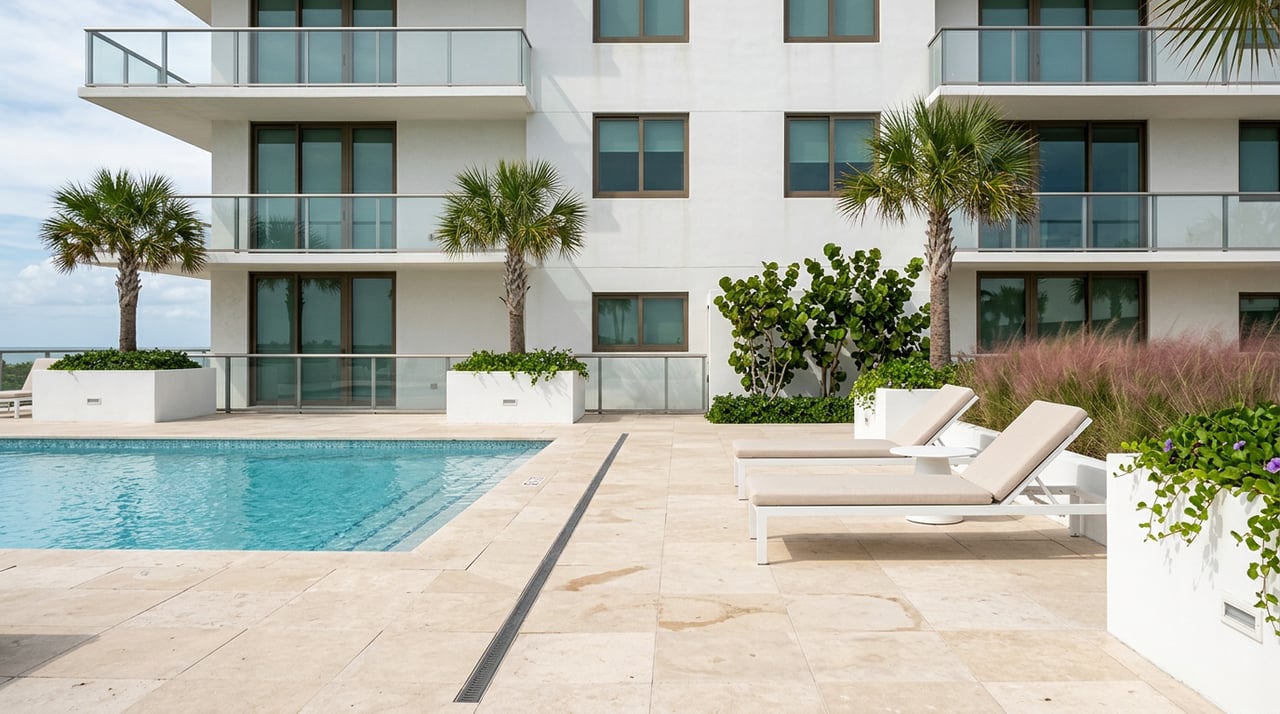
Common offerings include staffed lobbies or gates, fitness centers with ocean views, heated pools and spas, private boardwalks to the beach, club rooms with catering kitchens, valet or garage parking, guest suites, and sometimes on-site dining or a tiki bar. Match amenities to your lifestyle and budget, since services influence monthly fees.
HOA budgets, reserves, and Florida law
Florida’s Condominium Act sets clear rules for how associations operate, what they must disclose, and how budgets and reserves are handled. If you buy into a condo, you are accepting that governance structure and its costs. Review the law itself for context in Florida Statutes, Chapter 718.
SIRS: the reserve-study you must verify
Florida requires a structural integrity reserve study, known as a SIRS, for buildings that are three stories or higher. The study identifies critical components such as roofs, painting, pavement, and structural items, along with remaining useful life and recommended annual reserve funding. Confirm that your building completed the SIRS and that current reserves are being funded to plan. You can read the statute framework in Chapter 718.
What monthly fees really include
Monthly assessments vary widely by building, square footage, and service level. In higher-service towers, fees can run into the thousands per month. Always review the association’s full budget and year-to-date financials, not just the headline fee. Look for line items like master insurance, water, cable or internet, staffing, reserves, utilities, and maintenance contracts, so you understand your true carrying costs.
Special assessments and project history
Many coastal buildings have completed or planned capital work such as concrete restoration, garage or seawall repairs, and roof replacements. Ask for recent engineer reports, the date and scope of concrete projects, and whether those were paid from reserves or through special assessments. This history shapes both your near-term costs and longer-term risk profile.
Red flags to watch
- Ongoing litigation involving the association
- Low reserve balances versus SIRS recommendations
- Multiple recent or pending special assessments
- Inconsistent records, missing inspection documents, or frequent management turnover
Insurance, flood, and storm exposure
Master policy versus your unit policy
The association’s master policy generally covers the structure and common elements. You, as the owner, typically insure interior finishes, personal property, and liability through an HO-6 policy. Verify the master policy carrier, limits, and deductibles, and confirm any sublimits that might affect your out-of-pocket responsibility. The statutory framework is in Chapter 718.
Florida’s loss-assessment requirement
Florida requires condo unit policies to include a minimum level of loss-assessment coverage. This protects you if the association assesses owners for covered losses or large deductibles. Association requirements often exceed the statutory minimum, so select coverage that matches your building’s risk and rules. See a case reference related to the statute at FindLaw’s Florida decision archive.
Flood risk and quotes
Singer Island is a low-lying coastal environment with hurricane, wind, and storm surge exposure. Flood insurance is separate from your HO-6. If a lender requires flood coverage based on FEMA mapping or building elevation, you will need a policy through the NFIP or a private carrier. Get a flood-zone determination and a firm quote early in your process.
Rising premiums and market dynamics
Coastal Florida buildings have seen rising premiums tied to catastrophe risk, reinsurance costs, and loss history. Before you buy, request the association’s current insurance declarations and ask about recent premium changes. Then price your own HO-6 and flood policies with adequate loss-assessment limits. For a practical overview of insurance issues, review this Florida condo property claims guide.
Rental rules and investor notes
Rental permissions come from two places: the association documents and local city or town regulations. Singer Island includes Riviera Beach and Palm Beach Shores, which can have different rules and licensing requirements. Use this Singer Island map to confirm the jurisdiction for a specific building, then review association bylaws and local codes before you plan any rental strategy.
- Some buildings allow seasonal or longer-term rentals, while others set minimum lease lengths or cap the number of rentals per year.
- Short-term rental operations work best when building services align with guest needs. Consider guest access, valet and parking procedures, package handling, and front desk or management support.
Lifestyle and remote ownership
Singer Island attracts full-time residents, seasonal snowbirds, and second-home owners. Amenity-rich buildings often have a strong seasonal profile, while boutique properties tend to feel more residential. Daily errands may lead you to nearby West Palm Beach for medical visits and specialty shopping. Proximity to Palm Beach International Airport is convenient for out-of-state owners, as noted in this destination overview.
If you live remotely, prioritize buildings that offer concierge or package handling, valet parking, in-house or readily available maintenance support, and clear guest policies. These reduce friction when you are not local.
Step-by-step due diligence checklist
Use this list before you write an offer and again during your inspection period.
Governing documents. Request the declaration, bylaws, and rules. Read rental and pet policies closely. See the legal framework in Florida Statutes Chapter 718.
Budgets and financials. Review the current annual budget, fee schedule, and year-to-date financials, including bank balances and reserve line items.
SIRS and reserves. Obtain the structural integrity reserve study if required, and confirm the association is funding to plan. You can reference the SIRS framework in Chapter 718.
Board minutes. Read at least 12 to 24 months of minutes for vendor issues, deferred maintenance, or planned assessments.
Insurance package. Ask for the master policy declarations page, including carrier, limits, deductibles, and any key sublimits. Confirm recent claims history.
Resale certificate. Review all required disclosures, including pending or approved special assessments and any litigation.
Engineer reports. Request recent inspection or restoration reports, including dates, scopes, and financing method for major projects.
Rental compliance. Confirm local rules and licensing for the building’s jurisdiction, since Singer Island spans more than one municipality. Use the Singer Island map to verify location, then check city or town code.
Flood and elevation data. Order a flood-zone determination or elevation certificate and obtain HO-6 and flood quotes before you finalize your numbers.
Financing fit. If using a conventional loan, confirm building eligibility with your lender early, since litigation, reserves, and owner-occupancy can affect approval.
Smart budgeting tips
- Compare apples to apples. Two buildings with similar fees can include very different services. Build a side-by-side list of what is included to avoid surprises.
- Price the full insurance stack. Combine your share of the master policy via HOA dues, plus your HO-6 with loss-assessment coverage, plus flood insurance where required.
- Model reserves and assessment risk. If reserves are underfunded relative to SIRS recommendations, assume a risk of higher fees or special assessments.
- Plan for remote-owner extras. Budget for key services like a local handyman, periodic interior checks, AC maintenance, and package handling if not covered by staff.
How we help you buy with confidence
Choosing the right Singer Island condo is about lifestyle, risk, and services. We help you match those three with on-the-ground insight, private showings, and clear due diligence support. Our team is adept with remote workflows, live video tours, and coordinating the details that matter to out-of-state buyers. If you want a calm, thorough plan from discovery through closing, we are here to guide you.
Ready to find your oceanfront fit on Singer Island? Connect with Kristen Danzig and Amanda Caracuzzo. Find it. Love it. Own it.
FAQs
What public beach options are near Singer Island condos?
- You have two popular choices: John D. MacArthur Beach State Park for natural shoreline and trails, and Ocean Reef Park for convenient public access with parking and picnic areas.
How do Florida’s new condo reserve rules affect buyers on Singer Island?
- Buildings three stories and higher must obtain a structural integrity reserve study and fund reserves accordingly. Review the SIRS and budget, then confirm funding against Florida Statutes Chapter 718.
What insurance do I need for an oceanfront condo in Florida?
- The association carries a master policy, while you insure interiors and liability with an HO-6, add flood insurance if required, and maintain loss-assessment coverage. See Chapter 718 and a case reference on loss assessment at FindLaw.
Can I operate a short-term rental in a Singer Island condo?
- It depends on both your building’s rules and the city or town. Singer Island spans Riviera Beach and Palm Beach Shores, so verify the building’s jurisdiction on this map and confirm association restrictions and local licensing.
How much are monthly HOA fees for oceanfront condos on Singer Island?
- Fees vary by building, size, and services. Higher-service towers can run into the thousands per month. Always review the full budget, reserves, and what utilities or amenities are included before you commit.