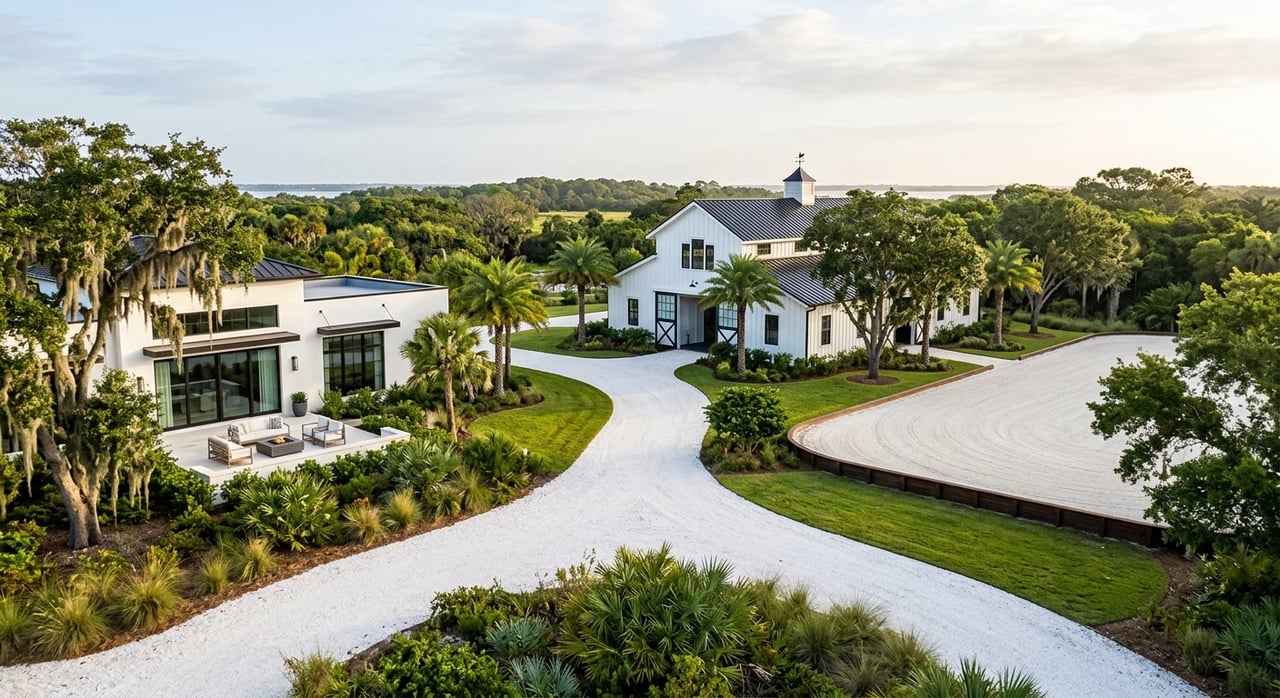
If you are dreaming about more space, room for horses, and a home that feels tucked away without leaving northern Palm Beach County, Jupiter Farms likely already caught your eye. It offers a rare mix of acreage living, equestrian potential, and access to parks and trails, but buying here is not as simple as picking the prettiest barn or the largest lot. To buy wisely, you need to understand how parcel size, zoning, drainage, and utilities can shape what you can actually do with the property. Let’s dive in.
Why Jupiter Farms Stands Out
Jupiter Farms sits in the northernmost part of Palm Beach County, west of Florida’s Turnpike. The area is mostly residential, and its land pattern is tied closely to acreage, privacy, and flexible residential-agricultural use.
According to the county-hosted neighborhood plan, buildout density is around one unit per 1.25 acres. The same plan identifies Agricultural Residential, or AR, as the dominant zoning in the area, with permitted uses that include agriculture, home businesses, and private stables.
That combination is a big reason buyers are drawn here. You can find a property with breathing room and a more rural feel, while still staying connected to Jupiter and surrounding Palm Beach County conveniences.
Acreage Is Not One-Size-Fits-All
One of the most important things to know about Jupiter Farms is that acreage inventory is not uniform. The county plan reports many parcels around 1.25 acres, along with additional lots in the 2.5- to 5-acre range, some 5- to 10-acre parcels, and a smaller number of 10-acre-plus tracts.
That matters because your buying strategy should change depending on the lot size and your intended use. A 1.25-acre homesite may work well if you want privacy and limited horse infrastructure, while a larger parcel may offer more flexibility for barns, turnout space, trailer parking, or future improvements.
It also means you should not assume every acreage listing offers the same opportunities. In Jupiter Farms, two properties can look similar online but function very differently once you review their parcel details.
What Zoning Means for Horse Properties
If you are shopping for an equestrian home in Jupiter Farms, zoning deserves a close look early in the process. Palm Beach County’s ULDC defines a private stable as horse care for the occupants or owners of the premises.
The county also treats a private stable with 12 stalls or fewer on a single-family parcel as an accessory structure. In addition, boarding of up to four non-owned horses is allowed on sites of at least two acres, while commercial stables require a minimum of five acres.
For buyers, the takeaway is simple: horse use is tied to the exact parcel. Barn size, horse count, and the intensity of your planned use should be evaluated against acreage, setbacks, and the property’s layout.
Private Stable vs. Larger Horse Setup
A smaller acreage parcel may still support a modest private stable. A larger parcel is more likely to accommodate more extensive equestrian infrastructure or boarding scenarios allowed by county rules.
Still, that should never be treated as automatic approval for a specific plan. The actual site layout, setbacks, and legal status of the parcel all matter.
Think Beyond the House
In Jupiter Farms, an equestrian property is often best understood as more than a house with land. You may be evaluating a detached barn, paddocks, turnout areas, trailer parking, storage, fencing, and perhaps a workshop or additional outbuilding.
That is why your tour should include the full site, not just the interior finishes. A beautiful home matters, but the land plan often drives long-term value and usability on acreage properties.
Riding Access Adds to the Lifestyle
For many horse buyers, Jupiter Farms is appealing not only because of private property options, but also because of access to nearby equestrian facilities and public trails. That nearby infrastructure can shape how often and how easily you ride.
Jupiter Farms Park includes a public equestrian facility at 16655 Jupiter Farms Road. Palm Beach County says it is open sunrise to sunset except during special events and includes a 140 by 230-foot sand arena, a 160 by 230-foot grass arena, a 70 by 130-foot warm-up arena, and horse-trailer parking.
Riverbend Park and Cypress Creek
Riverbend Park is another major asset for buyers in this area. The county describes it as a wildlife management area at 9060 Indiantown Road with nearly 10 miles of hiking and biking trails, 7 miles of equestrian trails, and 5 miles of canoeing and kayaking trails.
Cypress Creek Natural Area adds another nearby riding option. The county says it spans both sides of Indiantown Road, includes trailheads at 10035 and 9424 Indiantown Road, and features a 1-mile equestrian trail from Taylor Road to the trailhead.
The county’s equestrian-trails information also lists Loxahatchee Slough’s Luckey Tract, which offers 4.3 miles of equestrian trails with access via Pântano Trail through Riverbend Park. For buyers who value riding access, these nearby public options can be an important part of the lifestyle equation.
Know the Trail Rules
If public trail riding is part of your plan, be sure to learn the local rules as part of your due diligence. Cypress Creek’s trail rules require riders to stay on designated trails, avoid tying horses to trees or shrubs, carry proof of a negative Coggins test, and follow helmet rules for younger riders.
These details may seem small, but they matter if trail access is one reason you are choosing this area. A good buying decision looks at both the property and how you will actually use it day to day.
Wells, Septic, and Rural Utilities
Many western Palm Beach County acreage properties rely on private drinking water wells and septic systems. That is normal for this type of property, but it also means your inspection and due diligence process should be more detailed than it might be for a home on central utilities.
The Florida Department of Health in Palm Beach County says its environmental health staff reviews and approves septic and well plans before building permit and occupancy steps are completed. The department also says private well owners are responsible for making sure their water is safe and recommends regular testing.
South Indian River Water Control District says homeowners should generally inspect septic systems every three years and pump them every three to five years. When you are comparing properties, documented maintenance and recent inspections can be very helpful.
Questions to Ask About Utilities
Before you move forward on an acreage or equestrian property, ask for clear documentation on:
- The age and condition of the septic system
- Any recent septic inspections or pumping records
- The type of private well on site and available records
- Any recent water testing results
- Whether planned improvements could affect the well or septic layout
Drainage Matters More Than Many Buyers Expect
Drainage is one of the most property-specific issues in Jupiter Farms. South Indian River Water Control District says it maintains roads, canals, and swales in the district.
Its culvert guidance describes Jupiter Farms as an older at-grade development that predates modern subdivision design criteria. In practical terms, that means the lots themselves play a major role in stormwater retention before water reaches district canals.
For you as a buyer, this is a major due diligence point. You should verify swales, driveway culverts, and any past or planned filling or grading work before assuming an acreage parcel will be simple to maintain.
What to Look For on Site
During a showing or inspection period, pay attention to:
- Site grading and low areas
- The condition and placement of swales
- Driveway culverts and access points
- Signs of standing water or drainage modifications
- Whether future improvements may require additional review
A parcel can be attractive and still need careful planning for long-term use. This is especially true if you hope to add equestrian features or make site changes after closing.
Future Plans and Subdivision Questions
Some buyers are attracted to Jupiter Farms because they see acreage and imagine easy future subdivision or redevelopment. That is where local land-use rules become very important.
The county-hosted Jupiter Farms plan says new RR10 lots must be at least 10 acres, while older smaller parcels remain buildable as grandfathered lots. It also notes that legal lots of record and nonconforming lots can receive different setback treatment under current ULDC rules.
This means subdivision potential is parcel-specific, not neighborhood-wide. If your purchase depends on expanding, repurposing, or dividing the property later, you should verify the parcel’s legal status, future land use, zoning, and any deed restrictions before you make an offer.
A Smart Due Diligence Checklist
When you are buying acreage or an equestrian home in Jupiter Farms, a strong process can save you time, money, and frustration. Here are some of the most important parcel-level questions to verify:
- Is the parcel a legal lot of record?
- Does it have nonconforming dimensions that could affect setbacks or redevelopment options?
- Is your planned horse use private or commercial?
- Does the acreage meet the county threshold for that intended use?
- Does the property rely on a private well and septic system?
- Are those systems documented and recently inspected?
- Does the lot depend on district drainage features, swales, or culverts?
- If you want future subdivision or a different use, do future land use and zoning allow it?
Why Local Guidance Helps
Acreage and equestrian properties often require a more layered buying process than a typical suburban home search. You are not only evaluating the home itself, but also the parcel’s layout, utility setup, drainage conditions, and how county rules affect your plans.
That is where experienced, detail-oriented guidance matters. Having a team that understands the Jupiter area, knows how to structure a careful search, and can help coordinate the right questions early can make the process far more efficient and far less stressful.
Whether you are relocating, buying your first horse property, or searching for a long-term land-and-lifestyle investment, the goal is the same: make sure the property fits both your vision and the rules that govern it.
If you are considering acreage or equestrian homes in Jupiter Farms, Kristen Danzig and Amanda Caracuzzo can help you evaluate the details, narrow the right opportunities, and move forward with clarity. Find it. Love it. Own it.
FAQs
What makes Jupiter Farms different from other acreage areas in Palm Beach County?
- Jupiter Farms is mostly residential and shaped by acreage-based land use, with many parcels around 1.25 acres plus larger tracts in the 2.5- to 10-acre-plus range. Its AR zoning and equestrian-friendly framework make it especially appealing for buyers who want space and horse potential.
What should buyers know about equestrian zoning in Jupiter Farms?
- Palm Beach County allows private stables as an accessory structure on certain single-family parcels, and horse use depends on the exact acreage, setbacks, and lot configuration. Boarding up to four non-owned horses is allowed on sites of at least two acres, while commercial stables require at least five acres.
What utilities are common on Jupiter Farms acreage properties?
- Many acreage properties in this part of Palm Beach County rely on private wells and septic systems. Buyers should review available records, recent inspections, and maintenance history as part of due diligence.
What drainage issues should buyers check on a Jupiter Farms property?
- Buyers should verify swales, driveway culverts, grading, and other drainage-related features because Jupiter Farms is an older at-grade development where lots play an important role in stormwater retention.
What public riding options are near Jupiter Farms equestrian homes?
- Nearby riding resources include the public equestrian facility at Jupiter Farms Park, equestrian trails at Riverbend Park, and the equestrian trail at Cypress Creek Natural Area, along with access to Loxahatchee Slough’s Luckey Tract through Riverbend Park.
Can you subdivide acreage in Jupiter Farms later?
- That depends on the specific parcel. The county plan says new RR10 lots must be at least 10 acres, while older smaller parcels may be grandfathered, so buyers should verify legal lot status, zoning, future land use, and any deed restrictions before assuming subdivision is possible.